
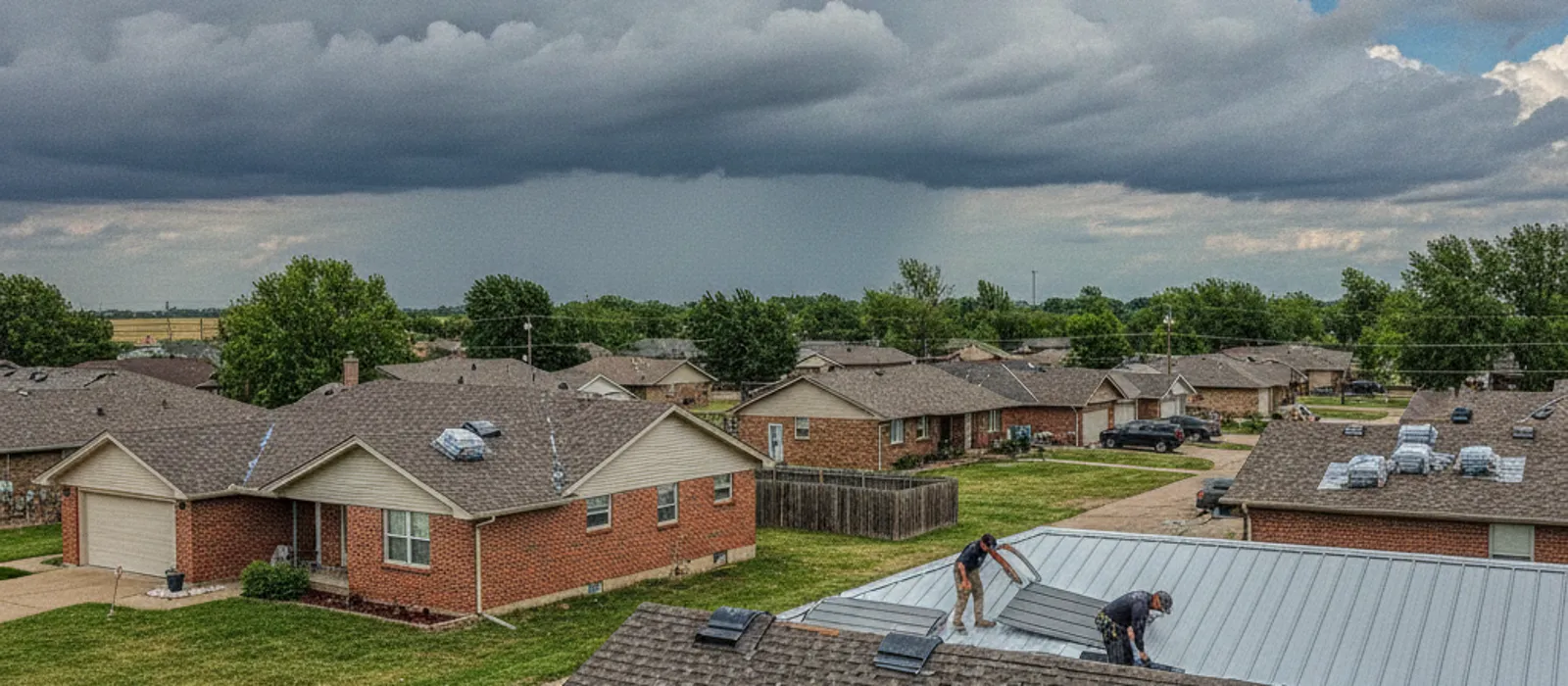
Check Your Property, Then Decide What Work Is Needed
After a storm in Maize, first identify immediate hazards, document visible changes from safe locations, and request a professional roof assessment when damage or exposure is suspected. The purpose of a storm check is to establish the condition of your roof. Nearby repairs, a weather alert, or a contractor’s route through the neighborhood do not establish that your home needs replacement.
Use Maize roofing services to request a documented inspection. Tell the scheduler whether roofing is missing, water is entering, or a branch struck the house. If you have no safe view of the roof, say that the extent is unknown rather than guessing.
A useful outcome can be urgent protection, a defined repair, further investigation, or no identified repair need within the inspection’s limits. The report should explain which result applies and why. It should not begin with a predetermined project size.
Separate Safety, Documentation, and Purchasing
These are three different decisions. Safety concerns require immediate attention. Documentation preserves what was observed. Purchasing permanent work requires an understandable scope. Keeping them separate helps a homeowner respond promptly without signing an unclear replacement agreement.
Stay away from downed lines, unstable trees, loose roofing, and damaged structures. Do not enter an attic with visible distortion or stand beneath a bulging ceiling. If occupants may be in danger, obtain appropriate emergency assistance before attempting a roof record.
Once the area is safe, photograph what is accessible and contact a professional. You can authorize necessary temporary protection while still asking for evidence and a written scope for permanent work. A storm does not remove the value of understanding what you are buying.
Create a Property Record in Three Parts
The first part is the event record: when you noticed the storm and what you directly observed. The second is the condition record: photographs and descriptions of your property. The third is the professional assessment: findings, limitations, and proposed action.
Do not merge those parts into a single unsupported statement. “Hail was reported nearby” and “the inspector identified damage on the west slope” are different facts. Both can be useful when their roles remain clear.
Keep original image files and label copies for easy reference. A folder named by date and property address is sufficient. You do not need elaborate software; consistent labels and a short timeline are more important than a polished presentation.
Use Weather Information for Context
The National Weather Service documented a Wichita hail event on April 25, 2026. That record provides a regional example of significant weather, but it does not prove exposure or damage at a particular Maize home. NWS Wichita event summary.
For the storm you are investigating, retain the relevant official record if available and label it as weather context. Do not substitute a different event because its description seems similar. If the exact date is uncertain, preserve that uncertainty.
Ask a contractor providing weather data to identify its source and geographic relevance. A map can help organize an investigation, but the roof report must still describe actual property findings. The evidence should not jump from a broad storm area to an automatic replacement recommendation.
Make a Safe Exterior Observation Round
From stable ground, look for newly displaced materials, visible gaps, damaged gutters, and debris impact. Use camera zoom rather than a ladder. If the roof is hidden, document the limited view and leave the closer assessment to the inspector.
Photograph the whole elevation before taking detailed images. Wide views show where a feature belongs, which is especially useful when several slopes or outbuildings are involved. Record the garage and detached structures separately.
Do not mark, scrape, press, or lift roofing to test a suspected defect. Those actions can alter evidence and damage material. Your role is to preserve a record and identify concerns, not to perform the professional evaluation.
| Record item | What to capture | Keep separate from |
|---|---|---|
| Observation date | When the change was first noticed | Assumed exact failure time |
| Roof overview | Slope and recognizable landmarks | Unlocated close-up images |
| Ground debris | Material where safely visible | Final repair quantity |
| Interior symptom | Room, location, and active or dry condition | Assumed exterior source |
| Weather reference | Official event and geographic context | Proof of damage at the address |
| Inspection report | Findings and inaccessible areas | Sales estimate alone |
| Temporary work | Protected area and follow-up plan | Permanent repair completion |
Give Interior Water a Separate Priority
If water is entering, report it when calling rather than waiting for the exterior inspection. Explain the room, whether dripping is active, and any visible ceiling distortion. Keep people and belongings away from unsafe areas.
A dry stain still deserves context. Was it present before the storm? Did its outline change afterward? Was the ceiling recently painted? Those observations help distinguish an old record from a new symptom without assigning a cause prematurely.
Do not assume every post-storm interior moisture observation is caused by a damaged shingle. Ask the inspector to evaluate the likely path. If another system or trade may be involved, have that limitation included in the report and obtain the appropriate follow-up.
Request Findings by Roof Area
Ask the inspector to identify each evaluated slope and component. A statement that the roof has “storm damage” is too broad to support a repair decision. The report should describe what was observed and where.
GAF’s storm resources identify visible signs such as blown-off shingles as reasons for professional assessment. GAF storm damage resources. Use those signs to guide the visit, while leaving the extent and significance to the property inspection.
If the inspector recommends broad work, request photographs from the additional areas involved. If damage is limited, ask how the repair will connect to retained roofing. The scope should follow the findings rather than the other way around.
Treat Hail Indicators as Clues Requiring Evaluation
Dents on a metal component may support that impacts occurred, but the shingle condition still requires its own assessment. Ask the inspector to distinguish collateral observations from identified roof-covering damage.
IBHS publishes a guide comparing hail damage with other conditions that can be confused with it. IBHS hail damage identification guide. The homeowner takeaway is to request a reasoned identification, not to diagnose a mark from a single image.
Do not press suspected bruises or scrape away granules. If the report uses technical terms, ask the inspector to explain what was actually observed and how it supports the conclusion. A circle drawn on a photograph should have a caption and location.
Record What Could Not Be Inspected
Weather, roof condition, access, and visibility can limit an inspection. Ask the report to name those limits. An inaccessible rear slope should not silently become a satisfactory finding.
Clarify the methods used: ground observation, aerial photographs, direct professional access, or interior evaluation. Different methods answer different questions. The report should not imply that concealed layers were inspected when they remained covered.
If a recommendation depends on an unverified condition, request the next step needed to resolve it. That may involve a return visit or limited investigation during authorized work. Uncertainty should lead to a defined question, not an automatic worst-case conclusion.
Handle Temporary Protection as a Short Project
Ask which area needs protection and what the measure is intended to accomplish. Request documentation before and after the work and identify the planned permanent follow-up. The invoice should clearly state that the work is temporary when that is the case.
If another contractor will perform the final repair, share the temporary-work record with them. They need to know what was installed or disturbed. This helps prevent the temporary measure from becoming an unexplained part of the permanent roof.
Monitor the original interior symptom from safe occupied areas while waiting. Report new water promptly. A temporary measure can be useful without being a guarantee against every future weather condition, so its limits and follow-up plan should remain clear.
Confirm Maize’s Process Before Permanent Work
The City of Maize lists roofing and siding among permit categories and provides a roofing and siding application route. It directs owners with uncertainty to contact the city before work begins. Maize permits.
Once the inspection defines the scope, ask who will handle required permits and inspections for the address. Keep that responsibility in the proposal. Do not assume that a mailing address or school district identifies the governing authority.
If the project expands from roofing into structural, electrical, or other work, revisit the administrative scope. The city should answer requirements questions for its jurisdiction. A contractor’s experience on another house is useful background but not a substitute for checking the current project.
Compare Repair, Replacement, and Further Investigation
A repair proposal should identify the defect and its boundary. A replacement proposal should explain the broader conditions that make localized work unsuitable or less practical. A recommendation for further investigation should identify the unanswered question.
Use storm-related roof repair information and roof replacement planning to organize those options. Do not treat them as competing sales categories before the inspection establishes what your roof needs.
In a hypothetical Maize home, one slope has a documented localized problem while the rest has no identified repair recommendation. A focused scope may be appropriate. Another home may have multiple affected areas and repair limitations. The difference is the property record, not simply whether both homes experienced the same storm.
Keep the Estimate Independent of Coverage Assumptions
Ask the contractor to describe the technical work in ordinary terms even if an insurance claim is involved. The proposal should remain understandable without relying on a statement that an insurer will pay for everything.
Direct coverage, deductible, and settlement questions to the insurer and the applicable policy. A roof inspection identifies physical conditions; it does not establish the terms of a claim. Keep those conversations and documents distinguishable.
Use the roof cost guide for budgeting questions and request actual property-specific figures. This article provides no local storm-repair price quote. Any allowance or optional work should be identified before you approve a contract.
Manage Multiple Visits Without Losing the Record
If several inspectors visit, provide each the same timeline and known history. Ask them to document any work or material disturbance they perform. Consistent information makes competing conclusions easier to compare.
Keep reports labeled by company and date. Do not combine photographs from different visits without noting their origin. If one report contradicts another, ask which observation or inspection method explains the difference.
A second opinion is most useful when it addresses a specific uncertainty. “Please assess whether this area is repairable” is more productive than asking only whether the first estimate is too high. The homeowner’s goal is a sound decision, not a vote count.
Close the Storm Check With an Action List
At the end of the process, write down the immediate action, permanent scope if any, unresolved questions, and responsible contact. A report recommending no work should still identify its inspection limits and what future change warrants follow-up.
For completed repairs, retain before-and-after photographs and approved changes. Confirm that temporary materials and any related work were addressed. Keep the administrative documents with the repair record where applicable.
Then observe the property during later rain from safe locations. A storm check becomes useful maintenance history when it records what was found and what happened next. It should leave you with fewer unanswered questions, not only a stack of proposals.
Questions About a Maize Storm Check
Do My Neighbors’ New Roofs Mean I Need One?
No. Their work may have a different cause, scope, or history. Use neighborhood activity as a reminder to review your own property, then rely on documented findings at your address.
What If I Cannot See Any Roof Damage?
Record that no concern is visible from your safe observation points. If there are interior symptoms, debris impact, or other reasons for concern, request an inspection. Limited visibility should not be confused with a complete roof assessment.
Should I Sign During the First Visit?
Review the findings and the actual agreement before committing to permanent work. Necessary temporary protection can be discussed as its own scope. Make sure you understand the areas, materials, exclusions, and change process in any contract you approve.
What Should the Final Report Give Me?
It should identify evaluated areas, observed conditions, limitations, and recommended actions with supporting photographs. A clear report lets you explain the next step to another household member without relying on the inspector’s sales presentation.
Distinguish a New Observation From a New Defect
A storm often prompts the first close review of a roof in a long time. Record that distinction when an inspector finds a condition with uncertain history. “First documented after this storm” is accurate even when the exact origin cannot be established. It is more useful than assigning every finding to the latest event.
Ask whether previous listing photographs, maintenance records, or repair images would help resolve that uncertainty. Share what already exists without attempting to manufacture a before-and-after comparison. If the history remains unknown, the report can still identify the present condition and required work. Uncertain timing does not prevent a practical repair decision, but it should remain visible in the record.