
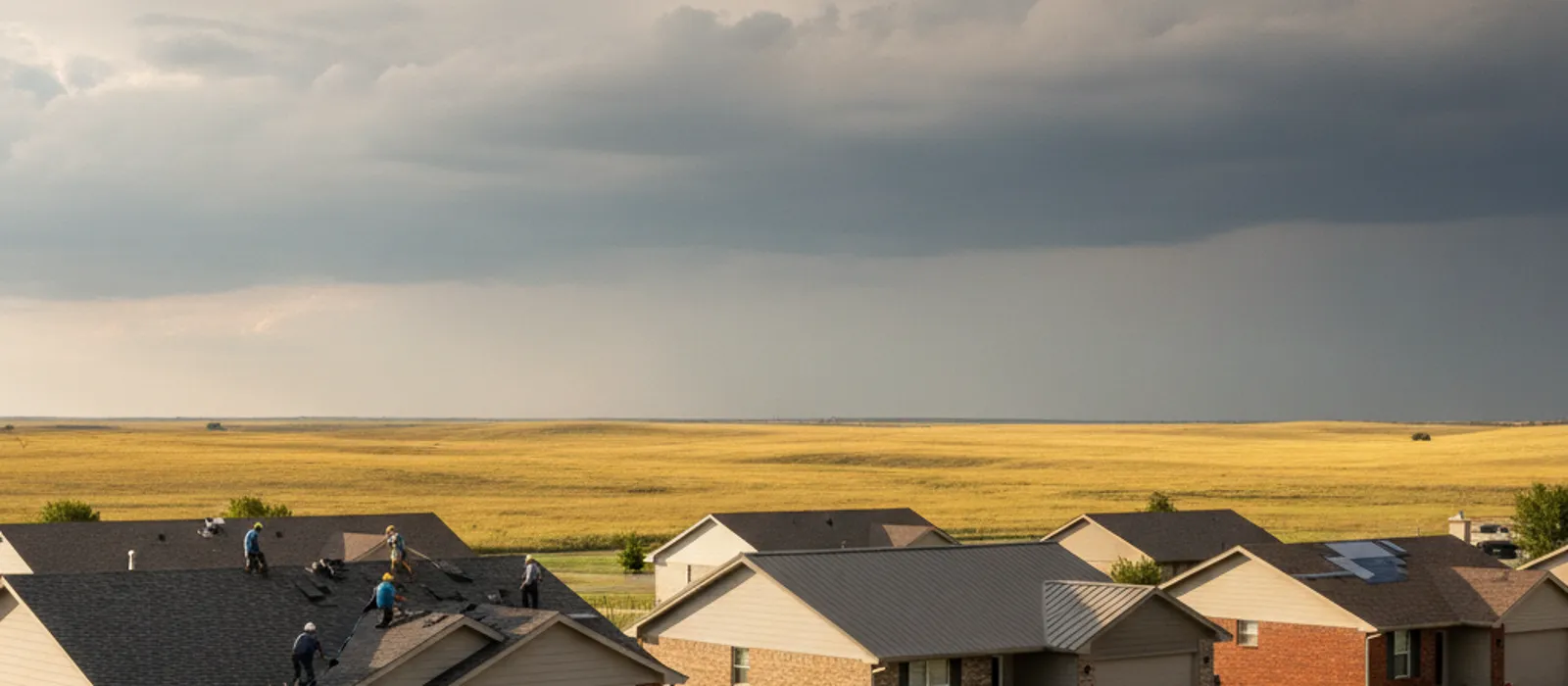
Installation Time Is Only Part of the Replacement Timeline
A Wichita roof replacement timeline should include assessment, scope approval, material readiness, scheduling, removal, installation, cleanup, and final documentation. The days when a crew is visibly on the roof are only one part of that calendar. Ask for both the expected installation duration and the conditions that must be satisfied before work starts.
GAF’s roof replacement timing guide says an average-sized asphalt-shingle roof can often be replaced in one to two days, while complexity and other factors change the duration. Treat that as general context, not a promise for your house or a current Wichita scheduling quote.
When requesting roof replacement services, provide your preferred timing and any hard constraints. A home sale, travel date, or another construction project may affect planning. The contractor should explain what it can commit to and what remains dependent on materials, weather, or concealed conditions.
Separate the Calendar Into Clear Milestones
A milestone schedule makes uncertainty easier to manage. Instead of asking only when the roof will be done, ask what needs to happen before each stage can begin and who confirms readiness.
| Milestone | What should be resolved | What can delay the next stage |
|---|---|---|
| Assessment complete | Roof sections, material, visible condition | Missing access or unresolved design questions |
| Scope approved | Products, details, exclusions, change process | Owner selections or competing scopes |
| Materials ready | Delivery and product confirmation | Availability or custom fabrication |
| Start confirmed | Crew, weather, access, administration | Unsafe conditions or incomplete prerequisites |
| Roof installation complete | Required roof work and details | Concealed repairs or complex transitions |
| Site closeout | Cleanup, review, remaining items | Return work or missing documentation |
Use dates where the contractor can provide them, and label estimates as estimates. A schedule that clearly identifies its assumptions is more useful than a firm-sounding date with no explanation.
Do not interpret a delivery date as a guaranteed installation date. Likewise, a crew reservation does not prove that the correct materials have arrived. Ask who checks that both are ready.
Resolve Scope Questions Before They Become Site Delays
Choose the roof covering, color, and major accessories before ordering. Ask whether any proposed substitute changes appearance, performance requirements, or warranty eligibility. A substitution should be approved rather than quietly introduced because the preferred item is unavailable.
Decide how skylights, vents, gutters, and existing flashing will be treated. Leaving those decisions until removal can create avoidable delays and rushed choices. The estimate should identify retained components as well as replacements.
Discuss attic or ventilation concerns during planning. If evaluation indicates additional work, define it in the scope and schedule. Do not assume every moisture or comfort concern will be corrected simply because shingles are being replaced.
For a metal roof, ask about panel measurement, fabrication, and delivery constraints specifically. The scheduling pattern may differ from a stocked asphalt-shingle project. Use the actual proposed system rather than a generic roof-replacement duration.
Confirm Administrative Requirements Early
For properties served by the relevant authority, MABCD’s permit information provides an official starting point. Have the contractor verify the requirements for the address and scope and identify who handles the necessary steps.
Ask when any required documents must be submitted and whether inspections or photographs affect the work sequence. Do not assume a process used on another property applies unchanged to your house.
Keep the approved material and scope description consistent with the paperwork. If the plan changes substantially, ask whether administrative updates are needed. Handling that question before work avoids confusion later.
Permit steps are not the only prerequisite. Property-specific architectural approvals, access agreements, or coordination with another trade may also affect readiness. Identify these early rather than discover them when the delivery truck is scheduled.
Understand What a Weather Decision Means
A start decision should consider the planned work, available protection, and expected conditions. Ask how the contractor evaluates weather and when it will communicate a postponement. Homeowners should know whether confirmation occurs the afternoon before or the morning of work.
Rain is not the only consideration. The selected products and installation conditions matter. GAF’s cool-weather installation guidance discusses product handling and sealing considerations in cooler conditions.
A weather delay should not be treated as evidence of poor service by itself. Ask what work is being deferred and how the revised date will be set. Good communication distinguishes a reasonable safety or installation decision from an unexplained scheduling gap.
If temporary protection is already in place, ask how it will be checked during a delay. A postponed permanent job should still have a plan for an existing active leak. Keep the temporary and permanent scopes clearly identified.
Prepare the Property Without Entering the Work Zone
Before arrival, agree on vehicle parking, material storage, dumpster placement, and the route workers will use. Move vehicles and portable items from the agreed areas in advance. Ask how landscaping, exterior equipment, and access paths will be protected.
Arrange an indoor plan for noise-sensitive work, children, and household routines. A roof replacement can interrupt a normal day even when the homeowner does not need to leave the house. Tell the contractor about access needs that cannot be blocked.
Ask whether anything in the attic needs protection and who will handle it. Do not enter an unsafe or unfamiliar attic to prepare for the crew. Explain access limitations so the contractor can plan appropriately.
Keep the decision-maker reachable during work. If hidden damage appears, a prompt review can help the project continue. That does not mean approving every request instantly; it means agreeing beforehand on the evidence and communication needed.
Know What Happens After Removal Begins
Removal reveals conditions that may not have been visible during the estimate. Ask the contractor how it will assess the exposed deck, document problems, and determine whether repairs are needed before installation continues.
The ARMA replacement-versus-recover guidance identifies the deck and existing roof condition as important reroofing considerations. The practical timeline consequence is that concealed findings can change the work even after a careful preliminary inspection.
Require a clear change process. The roofer should provide photographs, describe the necessary correction, and explain the effect on cost and timing. Avoid a schedule that assumes all hidden materials are sound without stating that assumption.
Ask how much roof will be opened at a time and what protection plan applies if work cannot finish as expected. The contractor should answer at a planning level; the homeowner should not attempt to supervise rooftop safety or improvise emergency covering.
Expect Details to Take Time
Valleys, walls, chimneys, skylights, and changes in roof slope require work beyond placing large areas of shingles or panels. A complex roof can take longer than a simpler roof of similar area. Ask the estimate to identify the details most likely to affect duration.
If another trade is needed, coordinate its timing before the roof work reaches that point. A mason, siding contractor, or equipment specialist may need to complete a task before the roofer can finish the connection.
Do not judge progress solely by how much visible roof covering has been installed. Hidden layers and intersection work are part of the project. Ask for a brief daily account of completed stages and remaining tasks.
A hypothetical house with several dormers and a skylight may require more coordination than a straightforward gable roof. That is a planning example, not a claim about a specific Wichita project. The actual geometry should drive the estimate.
Distinguish Dry-In, Installation, and Final Completion
Ask the contractor to define any terms used in schedule updates. “Dried in” may describe a protected intermediate state; it should not be confused with all permanent roof details being complete. “Roof installed” may still leave site cleanup or paperwork outstanding.
Request a list of remaining items whenever the crew leaves before full closeout. Identify whether they affect weather protection, appearance, administrative completion, or documentation. This helps you understand the importance of the return visit.
If final trim or another component is delayed, ask what temporary condition exists and how it will be addressed. A small-looking missing item can still require a clear plan.
Avoid making final assumptions based on the disappearance of the dumpster or crew. Completion should be tied to the agreed scope and review, not just the end of visible activity.
Plan Cleanup as a Defined Stage
Ask what cleanup includes: roof debris, gutters where affected, landscaping, paved areas, and fastener collection. Identify areas that may be difficult to inspect, such as dense planting beds or gravel.
Request a ground-level walkthrough when the site is ready. Point out concerns from a safe location and ask the contractor to inspect them. Do not enter areas still being used for active work.
Discuss how follow-up cleanup requests are handled. Small debris may become visible after materials are moved or landscaping is uncovered. The response process should be clear without claiming that any method guarantees recovery of every fastener.
Keep children and household activity away from the work area until the contractor confirms it is ready for normal use. Site readiness is a practical part of the timeline, separate from the last shingle being installed.
Reserve Time for Final Review and Paperwork
Ask when you will receive the final invoice, product information, completion photographs, and any applicable permit or warranty documents. These should be planned deliverables, not an indefinite task after payment.
Review the final scope against the original contract and approved changes. Confirm that optional items were either completed or clearly declined. Ask about any unresolved punch-list item and its expected date.
If the project supports a home sale or another deadline, tell the contractor what documentation a third party needs. Confirm that the requested statement is something the contractor can accurately provide.
Do not assume the longest advertised warranty automatically applies. Keep the exact product and warranty documentation with the project file. Scheduling closeout should include collecting those records while the job details are still easy to verify.
Build a Realistic Personal Planning Window
Avoid booking an event, move, or other exterior project against the earliest possible completion date. Ask the contractor for the expected sequence and the main sources of uncertainty, then leave room for reasonable changes.
For travel, decide who can approve documented changes while you are away. If nobody can respond, schedule around that limitation. A roof open for necessary work is not an ideal time to discover that the owner cannot be reached.
For other trades, use milestones rather than assumptions. A painter may need the roof and wall work complete; a gutter crew may need specific edge details ready. Confirm those dependencies directly.
Review roof replacement cost factors alongside timing. A faster-looking proposal may omit work that another contractor has included. Compare complete scopes before treating speed as the deciding advantage.
Questions to Ask Before Accepting a Start Date
Ask whether all specified materials are available, whether the crew is assigned, and what could still postpone the start. Confirm the notification method and who will contact you if conditions change.
Ask what the expected working hours are and whether the crew anticipates returning on another day. Identify access restrictions and any household needs that affect the work.
Ask how concealed repairs will be approved and how the home will be protected if they extend the installation. Request a schedule update when a change is accepted, not merely an added price.
Finally, ask what marks the project complete. The answer should include the roof scope, cleanup, unresolved items, and final records. A clear definition prevents a one-day installation estimate from becoming an open-ended closeout process.
Frequently Asked Questions
Is a one-day roof replacement always realistic?
No. Some projects can be completed quickly, but size, geometry, product, access, weather, and hidden repairs influence the work. Request a schedule for your house rather than applying a general example.
Does a delay mean my roof will be left exposed?
The contractor should explain its protection plan before removal begins. Ask how the plan changes if work is interrupted. Do not assume either that exposure is unavoidable or that an unspecified temporary measure is sufficient.
When should I approve the color?
Before the order is finalized. Late changes can affect material availability and delivery. Confirm the exact product and color in writing so scheduling proceeds on the correct specification.
What is the most useful timeline document?
A short milestone schedule showing prerequisites, estimated work stages, communication points, and closeout deliverables. It gives you a practical way to plan while keeping uncertain dates visibly separate from confirmed commitments.
Use One Contact for Schedule Changes
Agree on a primary contact and a backup before installation. Ask whether updates will arrive by telephone, text, or email, and keep those contact details accessible. A missed message about weather or delivery can cause unnecessary disruption even when the contractor has made a reasonable scheduling decision.
For any revised date, confirm which other arrangements must change: vehicle relocation, another trade, a delivery, or access to the property. Ask whether the new date is confirmed or still tentative. A short written update showing the next milestone and the reason for the change is usually enough. The purpose is to keep everyone working from the same calendar, especially when the homeowner is coordinating several projects.