
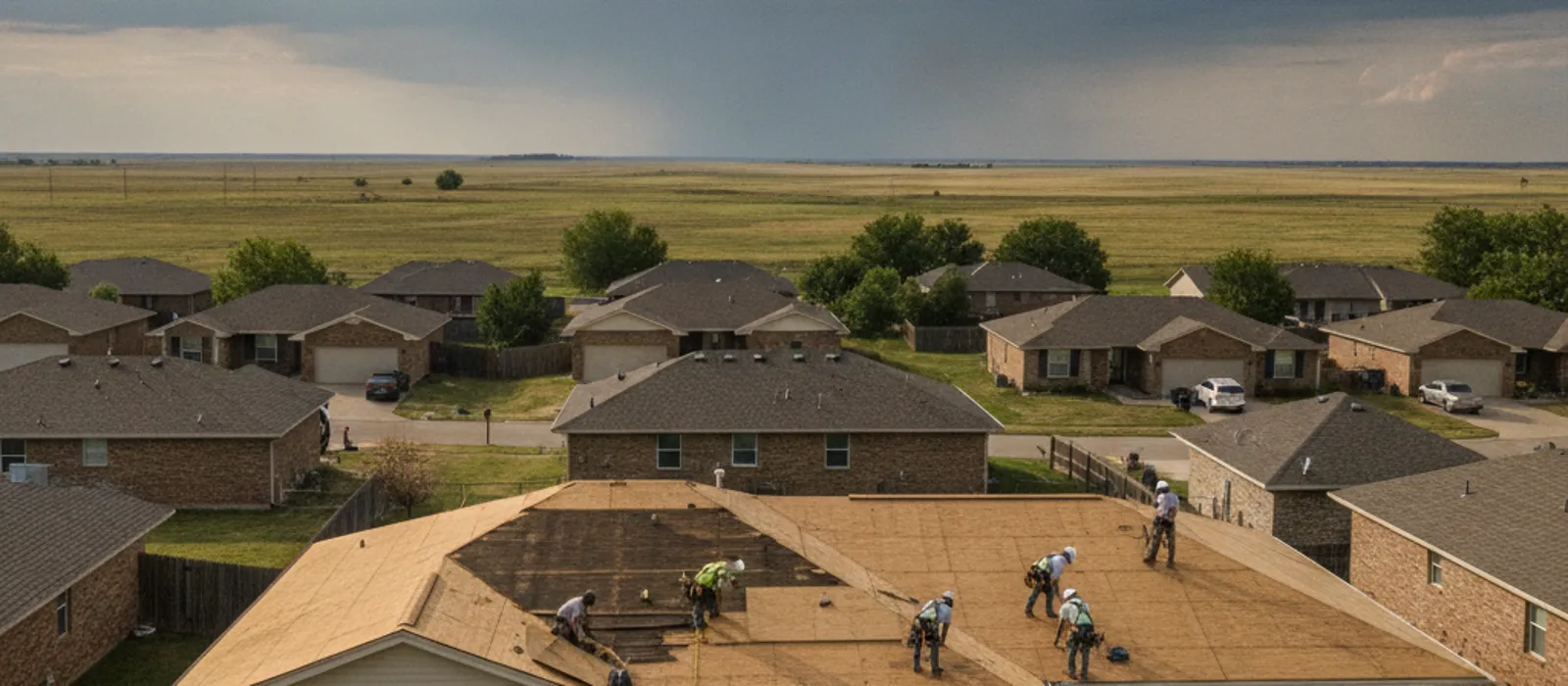
Decking Is the Roof’s Base, and It Is Not Automatically Replaced
Roof decking is the surface beneath the underlayment and roof covering. When a contractor recommends decking replacement, ask what is wrong with that surface, where the affected area is, and what replacement specification is proposed. A new roof does not automatically require all-new decking, but new shingles should not conceal an unsuitable base.
The decision may involve localized damaged panels, older board decking that needs a different preparation, or a broader condition requiring further evaluation. These are different scopes. Ask the contractor to distinguish deck replacement from framing repair, moisture remediation, and an optional upgrade. A single allowance labeled wood can hide important differences.
GAF describes decking as the foundation supporting roofing components and notes that damaged decking may need repair or replacement during reroofing. GAF explanation of roof decking. For project planning, connect this work to the roof replacement scope and replacement cost categories, rather than treating it as an unexplained surcharge.
Distinguish Decking, Framing, and the Roof Covering
The deck spans between structural supports and provides the surface to which roofing work relates. Rafters or trusses beneath it are part of the supporting structure. Shingles, metal panels, underlayment, and flashing are different parts of the roof assembly. A problem in one layer may require access through another without making them the same repair.
Ask the contractor to identify the layer in a photograph. This is particularly useful when an estimate uses terms such as sheathing, decking, substrate, or roof boards. Those may refer to similar functions, but the actual existing material and proposed replacement should be named.
If the report mentions structural sagging, request an explanation of whether the concern is confined to sheathing or involves supports below. Replacing panels does not by itself establish that a framing problem has been corrected. A qualified structural evaluation may be needed before the roofing scope can be finalized.
Do not test the roof by walking on it or probing from a ladder. Homeowners can provide leak records and photographs from safe locations. The physical assessment belongs to people equipped to evaluate and access the assembly.
Ask Why Each Area Needs Work
| Reported condition | What to request | Decision it supports |
|---|---|---|
| Decayed or softened panel | Location photographs and condition explanation | Localized removal and suitable replacement |
| Wet area | Moisture source assessment and drying plan | Whether replacement, drying, or both are needed |
| Uneven roof surface | Identification of deck versus framing cause | Correct repair responsibility |
| Older board deck | Product requirements and measured existing condition | Whether preparation or sheathing work is required |
| Inadequate attachment base | Applicable roofing specification | Necessary substrate correction |
| Widespread concealed damage | Mapped extent and further assessment | Larger scope with documented authorization |
The table is a review tool, not a rule that every stain means replacement. Ask what makes the material unsuitable for continued use. A photograph of discoloration alone may not answer whether a panel has lost integrity or whether the source is still active.
If the contractor proposes replacing all decking, ask why selective work would not address the condition. There may be a sound reason, but it should be stated. If the proposal is selective, ask how the boundaries of sound material will be established.
Understand What Can Be Known Before Tear-Off
A preconstruction inspection can identify clues and accessible underside conditions. It cannot always establish the condition of every covered surface. Finishes, insulation, roof shape, and restricted access can limit the view. Ask the inspector to say what was observed and what remains concealed.
Provide earlier leak locations even if they appear dry now. A repair near a chimney years ago may help the inspector focus an assessment. Old invoices and interior photographs can be useful without proving that the same condition remains active.
ARMA identifies deck inspection and correction as advantages of removing the existing roof covering. Its reroofing guidance also stresses evaluating the individual roof and manufacturer requirements. ARMA replacement versus recover bulletin.
This uncertainty should be reflected in the contract. A realistic proposal can include a base scope and a clear process for concealed conditions. An absolute promise that no deck work will be needed is not useful if the relevant areas have not been exposed.
Moisture Needs a Cause, Not Just New Wood
Ask what caused the deck problem and how that cause will be addressed. An exterior leak, condensation issue, or earlier exposure may require different corrective work. Replacing the visible damaged area without understanding the source leaves a question about the new material’s environment.
APA’s moisture guidance identifies roof design and drying as important considerations for wood roof assemblies. It recognizes several possible wetting sources, including condensation and roof or flashing failures. APA moisture mitigation guidance.
Use that information to ask for a project-specific explanation, not to diagnose the cause yourself. If deterioration is concentrated near a penetration, ask how the associated roofing detail is being corrected. If moisture is distributed across the attic, ask whether an assessment beyond a localized leak repair is needed.
Document who owns each correction. The roofer may replace decking while another contractor handles exhaust routing, insulation, or interior drying. The scope should make those responsibilities visible so the new roof does not close over an unresolved condition.
Specify Replacement Material by Requirements
Ask for the proposed panel or board specification and the basis for selecting it. Relevant considerations include the existing support arrangement, applicable requirements, and the roof covering’s installation instructions. Do not accept a material description that only says plywood when more detail is necessary to identify the work.
The homeowner’s role is to verify that a specification exists, not to choose thickness from a generic online chart. A neighbor’s roof may have different framing or loading conditions. The contractor should be able to explain which project conditions determine the selection.
Ask how panel edges, support, and attachment are addressed. These details may not appear as separate price lines, but they are part of installing a suitable deck. Request photographs before the area is covered if those details materially affect the scope.
Avoid substituting a cheaper product without written confirmation that it is appropriate. A last-minute change should be treated as a documented substitution, not an informal material swap. The same principle applies if the proposed work changes from isolated replacement to a broader sheathing layer.
Make the Unit Price Understandable
Deck work may be quoted by panel, area, or another defined unit. Ask exactly what the unit includes: removal, disposal, replacement material, labor, fastening, and any required support work. A low material-only number is not comparable to an installed price.
Ask how partial panels and waste are handled. The physical replacement area may not equal the number of full sheets purchased. There is no need to demand a universal billing convention, but the chosen method should be known before the roof is open.
For a hypothetical budgeting example, if an agreed installed unit price were $120 and six units were authorized, that line would total $720. These are invented arithmetic inputs, not Wichita market prices. The exercise shows why both the unit definition and quantity matter.
Keep framing repairs separate unless the contract expressly includes them. A unit price for sheathing cannot reasonably explain every possible structural condition. Ask how work outside the defined unit will be evaluated and priced.
Set an Approval Process That Works During Construction
Choose the person who receives discovery photographs and can authorize changes. Ask the crew to provide an overview, a close-up, the proposed quantity, and the price before proceeding with added work whenever practical. Agree on how urgent protection is handled if a decision takes time.
If you cannot be reached during the day, designate a contact or a limited preauthorization. The limit should be a deliberate choice based on the contract, not a blank instruction to replace whatever the crew wants. A defined process protects the schedule and your ability to understand the expense.
Ask how a major discovery changes the workday. The crew may need another professional or additional material before proceeding. Know who keeps the opening protected and how you will be updated. Do not pressure workers to close an unsuitable assembly simply to meet the original completion date.
Keep each approval attached to its photographs and invoice line. This makes the final quantity review straightforward. A text saying yes without context can be difficult to interpret later when several changes occurred on the same day.
Inspect the Evidence Without Climbing the Roof
Request photographs that identify the roof plane and nearby landmark, then show the affected area. A close image of damaged wood is insufficient if you cannot tell where it belongs or how much was involved. A simple marked diagram can connect separate photographs.
Ask for a photograph after replacement and before underlayment conceals the work. This provides a record of the completed area. It is not a substitute for required inspection or professional judgment, but it helps establish what was done.
If you disagree with the recommendation, ask for the specific concern and the applicable requirement. A focused question about suitability is more productive than debating whether wood looks old. If necessary, obtain another qualified assessment while coordinating weather protection.
Do not request unsafe demonstrations, such as standing on a suspect panel to prove it is weak. Documentation should come from normal professional inspection and construction methods. The aim is a clear record, not a dramatic demonstration.
Know When Another Scope Has Entered the Project
Deck replacement may reveal work beyond the original roofing contract. Framing distress, extensive moisture damage, electrical conflicts, or inaccessible construction can require additional expertise. Ask the contractor to identify that boundary and recommend the appropriate next assessment.
For Wichita-area projects, MABCD provides roofing and other trade permit information. Verify requirements for the actual scope and address, especially when work extends beyond the covering. MABCD permit information.
Do not assume that a roofing permit or an initial estimate automatically covers every structural change. Ask which authority review applies and who arranges it. Keep those records with the change order so the project history remains complete.
If an insurance claim is involved, construction necessity and policy coverage remain separate questions. Send the requested documentation to the insurer, but do not label all concealed wood work storm damage without evidence. The contractor should describe the condition accurately even when its payment source is unresolved.
Compare Two Hypothetical Decking Situations
Imagine a roof with one documented leak near a vent and a limited affected deck area. The proposal might reasonably combine localized sheathing replacement with correction of the vent detail. The useful questions concern extent, material, and whether the water source is resolved.
Now imagine an older roof with an uneven surface across several planes and uncertain framing history. A per-panel allowance may not adequately describe the concern. The next step may be a broader assessment before deciding how much sheathing work is appropriate.
Neither example establishes what your roof requires. They show why the same phrase, decking replacement, can describe a small supporting part of reroofing or a larger investigation. The scope should follow the observed condition.
When comparing bids, ask whether the contractors are assuming the same starting condition. One may have seen accessible attic evidence that another did not inspect. Resolve that information difference before treating the price difference as a sign of overcharging or superior value.
Review the Final Decking Record
At completion, reconcile the authorized quantity with the final invoice and photographs. Ask about any difference from the approved amount. A larger quantity may be justified, but it should be explained and documented rather than appearing unexpectedly on the final bill.
Keep the material specification and location record. Future repairs may be easier to evaluate when a professional knows which areas were replaced and why. This is particularly valuable if the original problem involved a recurring leak or mixed existing materials.
Confirm that the moisture or structural issue identified during the project has a documented resolution or a clearly assigned follow-up. New wood is only one part of the outcome. The homeowner should not have to infer that another trade completed its work simply because the shingles are finished.
Use the roof repair page for a localized concern and the replacement planning routes for a broader project. The decision should be based on a suitable base for the chosen roofing system, with visible evidence and understandable pricing. That is a more reliable standard than automatically accepting all-new decking or automatically rejecting every concealed-work charge.
Frequently Asked Questions
Does dark wood automatically need replacement?
Ask what the discoloration means in that location and whether the material remains suitable. Color alone does not answer the question. The contractor should explain the observed condition, any moisture concern, and the basis for replacing or retaining the material. Request further assessment when the explanation remains uncertain.
Why can the final quantity differ from the estimate?
Some deck areas are concealed before tear-off. A quantity change can be legitimate, but the contract should define documentation, measurement, and authorization. Ask to reconcile photographs and approved quantities with the final invoice rather than accepting an unexplained total.
Should I budget for an entire new deck just in case?
Ask the inspector what evidence supports the likely scope and what remains unknown. A reserve can help manage uncertainty, but it is not permission to replace everything. Keep the allowance separate from the approved work, and require the agreed evidence before unused contingency becomes a construction charge.