
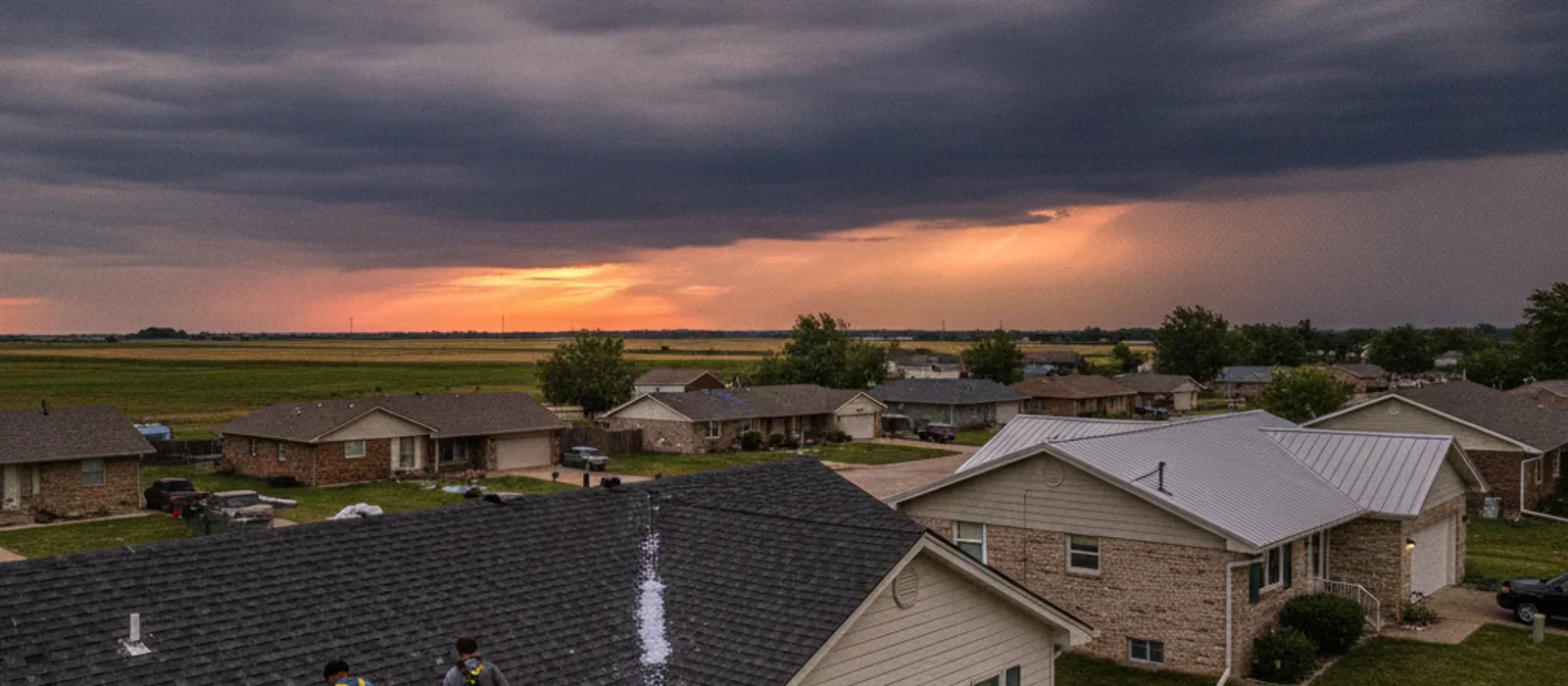
Emergency Roof Repair Starts With Safety and Water Control
After a storm, treat an open roof, active water entry, or a tree strike as an urgent assessment problem. Keep people away from damaged rooms, request professional temporary protection, and record what happened from safe locations. A ceiling that is sagging, electrical equipment exposed to water, or possible structural movement calls for emergency help beyond a routine roofing appointment. Do not climb up to investigate or fasten a tarp yourself.
An emergency visit should answer two immediate questions: can the affected area be occupied safely, and what can be done now to limit additional water entry? The permanent repair decision comes after those questions. A temporary cover does not establish that the roof needs replacement, and a dry room after rain stops does not establish that the opening has been repaired.
For a Wichita homeowner, the practical starting point is roof repair assessment, with a clear description of whether water is entering now. State the street address, affected room, visible exterior opening, and any tree or electrical involvement. Those details help the person scheduling the visit distinguish a leaking roof from a condition that first needs a utility, emergency responder, electrician, or structural professional.
Decide Which Situation You Actually Have
Use observations you can make without entering an unsafe space. You do not need to identify the exact failed roofing component before calling.
| Observation | Immediate priority | What to tell the responder |
|---|---|---|
| Tree resting on the building or a visibly distorted roofline | Keep away from the affected area; request emergency assessment | Tree position, rooms below, and any sounds or movement |
| Water near a light fixture or electrical equipment | Avoid the wet area and contact qualified emergency help | Where water and electrical equipment overlap |
| Open roof with rain entering | Arrange professional temporary protection when conditions permit | Approximate opening location and whether rain continues |
| Drip into an otherwise stable room | Protect belongings only where safe and request prompt service | Start time, drip location, and whether flow is increasing |
| Missing shingles with no visible indoor water | Schedule a documented roof inspection | Which side appears affected and when the change appeared |
| Old stain with no change during this storm | Record and investigate; do not assume a new emergency | Earlier leak history and current observations |
This table prioritizes the response, not the eventual repair size. A small opening above an electrical fixture can be more urgent than a larger dry area above an unoccupied porch. Conversely, a roof that looks mostly intact from the driveway can still have a dangerous tree load or concealed opening.
The National Weather Service advises checking damage only after the severe weather threat has ended and reporting downed power lines to local authorities. Continue following alerts while arranging help; a break in rain may occur before the threat is over. NWS guidance after severe weather.
Make the First Phone Call Useful
Start with the condition rather than a requested product. Saying that water is dripping through a bedroom ceiling after wind provides more useful information than asking for three new shingles. Include whether anyone has already inspected the roof, installed a cover, or removed a branch. A responder needs to know what has changed since the original event.
Ask whether the visit is for assessment, temporary weather protection, or permanent repair. These may be separate appointments with separate charges. Request the dispatch charge, approval process for additional work, and what happens if weather makes roof access unsafe. An honest inability to access the roof during dangerous conditions is different from a refusal to help.
Prepare one person to make decisions and one way to reach that person. If you will be away, establish how photographs and proposed work will be sent before authorization. Avoid granting an undefined instruction to do whatever is necessary. You can authorize a specific temporary intervention while reserving the permanent project for a written proposal.
A useful call note includes the company name, person contacted, time, promised next update, and stated limitations. During a widespread event, appointment windows may change. A named update time prevents repeated uncertain calls and helps you decide when another provider must be contacted.
Protect the Interior Without Creating Another Hazard
Move portable belongings only from dry, stable areas that can be reached safely. Keep children and pets away from the affected room. A container can catch an ordinary drip when its placement does not require standing under a sagging ceiling or approaching electrical equipment. Do not puncture a bulging ceiling, remove ceiling material, or enter a wet attic to hunt for the leak.
Photograph the room from its entrance if that is the safe vantage point. You do not need a close photograph at the cost of exposure to falling material. Document belongings before moving them when practical, but prioritize people and damage prevention over a perfect photograph. Write down what you moved so later pictures remain understandable.
Water management continues after the roof is covered. EPA recommends drying water-damaged areas and items within 24 to 48 hours to help prevent mold growth. That is a reason to arrange prompt assessment and drying, not a promise that a room is safe until a particular hour. EPA moisture and mold guidance.
A roofer may address exterior water entry while a restoration contractor evaluates wet insulation and finishes. Ask who is coordinating those scopes. Painting the ceiling can wait; stopping new water and understanding concealed wet materials cannot be treated as the same task as cosmetic touch-up.
Understand What Temporary Protection Can Accomplish
A professional temporary cover is intended to reduce exposure until permanent work can be completed. Its usefulness depends on the opening, surrounding condition, drainage, attachment opportunities, and weather. It is not an automatic substitute for replacing damaged flashing or rebuilding a roof section.
Ask the installer to identify the covered area in photographs and describe what remains exposed or uncertain. The explanation should be specific enough that another professional can understand the intervention. For example, a note might state that a cover protects the rear slope above the kitchen while a separate chimney detail still needs inspection. That is more useful than a receipt that says only emergency service.
Request a follow-up plan if wind moves the cover or interior water returns. Know whom to call after business hours and whether another visit carries an additional charge. Do not climb up to inspect the attachment or add weights to a cover. Report changes from indoors or the ground.
Be cautious about assigning a fixed lifespan to temporary work. The relevant question is whether the installer considers it suitable for the expected conditions until the agreed permanent repair date. If scheduling changes, ask for reassessment rather than assuming the original protection remains adequate indefinitely.
Document the Intervention, Not Just the Storm
Keep a simple sequence: damage first observed, calls made, temporary work authorized, work performed, and interior conditions afterward. Save original photographs and itemized receipts. Ask the roofer for before-and-after photographs of any area you could not see safely.
The Kansas Department of Insurance advises documenting damage and emergency repairs and retaining receipts; reimbursement depends on the claim and policy. Coordinate permanent repairs with the insurer when a claim is involved. Kansas home insurance claim guidance.
Do not describe a temporary repair invoice as proof that the insurer accepted coverage. The invoice establishes work and expense. Similarly, a roofer’s observation can help explain a condition without deciding how the policy applies. Keep those documents connected in your records but distinguish their purposes.
If belongings must be discarded or a damaged component removed for urgent work, ask the relevant professional and insurer how to preserve useful evidence safely. No one should leave an active hazard in place simply to maintain a photograph opportunity. Record why the work could not wait and who made the recommendation.
Separate Roof Openings From Other Storm Problems
A storm can create more than one repair need. A branch may damage the gutter and roof edge while wind affects a vent elsewhere. Water in a wall may involve siding or a window opening. A roofing visit should not end the investigation if the findings fail to explain the interior symptoms.
Ask the inspector to connect the observed exterior defect to the affected room. That connection may be provisional until a closer examination is possible. A good report can state an uncertainty plainly: an exposed area was covered, but the water path near the chimney still needs evaluation. An unsupported confident answer is less useful than a bounded next step.
If a tree is involved, coordinate tree removal and roofing access. The order of work should come from qualified people evaluating the site, not from an assumption that the tree can simply be pulled away. Ask who checks the structure after the obstruction is removed and before normal occupancy resumes beneath it.
For hail without an obvious opening, hail damage roof assessment is usually a more accurate service request than assuming emergency replacement. Urgency should follow the actual exposure and safety conditions, not the intensity of neighborhood conversation.
Approve a Permanent Scope After Stabilization
The permanent proposal should explain the defect, affected area, removal work, replacement components, and any concealed conditions that could change the price. Ask whether the recommendation is localized repair, a larger section, or full replacement, and what observation supports that boundary.
A proposal to replace a small number of shingles should explain how the surrounding material can be integrated into the repair. A proposal involving flashing should identify the junction being rebuilt. If the recommendation expands to replacement, ask why localized work would leave an unresolved problem. Use the replacement cost planning page to organize that larger comparison.
Do not let the cost of temporary work force the permanent decision. An emergency charge may be reasonable for mobilization and protection even when the final repair is modest. It may also be separate from the permanent contract. Ask whether any credit is offered and obtain it in writing rather than assuming it.
MABCD lists roofing among the trades for which it issues permits within its jurisdiction. Ask the contractor to verify the requirements for your address and scope, including any structural work. Sedgwick County permitting information. A Wichita mailing address alone should not substitute for checking the responsible authority.
Two Hypothetical Emergency Decisions
Suppose a homeowner sees water dripping into a hallway after a vent is visibly displaced. There is no ceiling distortion or electrical involvement. The immediate goal is to protect the interior and arrange a professional assessment. If the surrounding roof is serviceable and the defect is isolated, a localized permanent repair may follow temporary protection. The presence of water alone does not establish a whole-roof project.
Now suppose a tree strikes the rear roof, the ceiling shifts, and a bedroom door suddenly binds. The priority is assessment of a potentially unsafe area, not a fast shingle estimate. Tree removal, structural evaluation, and temporary weather protection may require coordinated steps before a roofing proposal can be finalized.
These are decision examples, not reported customer jobs. Their purpose is to show why the same phrase, storm damage, can describe very different response sequences. The most useful information is what changed at the house and what risk remains right now.
In either situation, ask for the next decision point. It might be confirmation that the cover is installed, a structural assessment after tree removal, or an inspection when the roof is dry. A specific checkpoint makes a stressful situation manageable without promising a completion date that conditions cannot support.
Check the Handoff Before Calling the Emergency Finished
Before the temporary crew leaves, establish which areas were inspected, which were inaccessible, and what signs require another call. Get photographs, an itemized description, and a contact for follow-up. Know whether the permanent repair is scheduled or whether another estimate is still needed.
Inside, record whether dripping stopped and whether stains changed. A stopped drip is a useful observation, but concealed materials may still need drying or replacement. Ask the restoration professional how dryness will be evaluated before finishes are closed. Keep the exterior and interior completion records together.
If rain returns before permanent work, observe only from safe indoor locations. Report renewed leakage with the time and room rather than attempting to adjust the cover. The temporary plan should include a response to changing conditions.
Close the emergency phase when immediate hazards have been addressed, further water entry has an appropriate control, and responsibility for the remaining work is clear. Permanent roof repair, interior restoration, and any claim paperwork may continue afterward. Keeping those milestones distinct helps you avoid both premature reassurance and an unnecessary rush into a larger roofing contract.
Frequently Asked Questions
Should I accept a whole-roof contract during the emergency visit?
An emergency may justify immediate temporary work, but a permanent replacement still needs a defined scope. Ask whether the roof has been fully assessed or only made temporarily weather-resistant. If access was limited, wait for the missing assessment before treating the replacement recommendation as final. Keep any temporary authorization specific to the work needed now.
What if the temporary cover stops the drip?
Record that result and continue the agreed follow-up. It suggests the intervention changed water entry, but it does not establish the condition of concealed materials or complete the permanent repair. Ask who checks the interior and when the roofer returns.
What should a family member know if I am away?
Give that person the responder’s contact, the affected areas to avoid, and the limit of any work they may authorize. Share the photograph and invoice folder so updates stay together. They should report changing conditions without accessing the roof or attempting to adjust protection.